
How Much Does It Cost to Build an ADU in Ventura County?
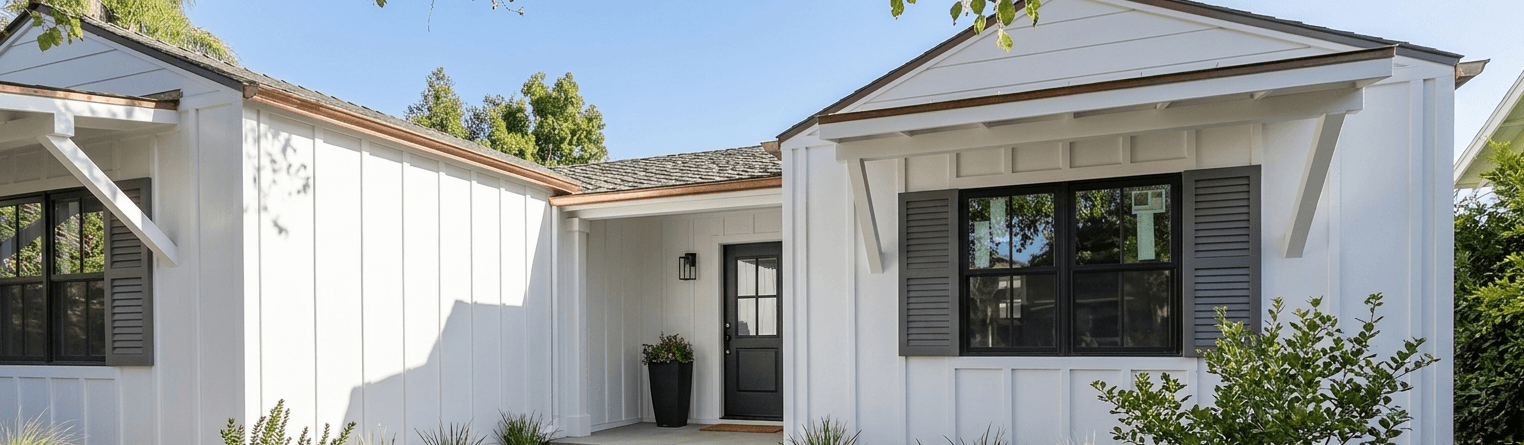
A stunning custom modern farmhouse built in Summerland, CA, showcasing flawless board and batten siding alignment, prominent contrast window trims, and a meticulously curated architectural profile.
When homeowners start researching the cost of building an Accessory Dwelling Unit (ADU) in Ventura County, they usually find generic online calculators or nationwide averages that don’t apply to our local reality. Building an ADU here involves navigating specific local regulations, city-specific fees, and complex site conditions. To provide a clear picture of what it actually takes to get a project off the ground, it helps to look at a real, local example.
A fantastic benchmark for a spacious family-sized unit is a recent project involving a 1,188-square-foot detached ADU featuring three bedrooms and two bathrooms. For the actual construction—the materials, labor, and structure itself—the cost came in at $330,000. This breaks down to roughly $278 per square foot for the hard construction costs. However, that number only tells part of the story, and understanding the missing pieces is what keeps a project from stalling out.
The Hidden Reality of Soft Costs and Local Fees
The $330,000 price tag covers the physical build but excludes soft costs such as architectural plans, structural engineering, city or county plan checks, permits, and impact fees. For a smaller garage conversion or a tiny unit, these fees are relatively minimal. But California state law draws a major line in the sand at 750 square feet.
Once an ADU crosses that 750-square-foot threshold, it is no longer exempt from development impact fees. For a large 1,188-square-foot detached build, homeowners must budget heavily for these extra expenses. In Ventura County, you can realistically expect to spend an additional $30,000 to $50,000 just to get the project greenlit before a single shovel touches the dirt.
These soft costs typically include:
-
Architectural design and structural engineering layout plans.
-
City or county building department plan-check and building-permit fees.
-
School district developer fees are calculated per square foot over the threshold.
-
Environmental and site-specific reports, such as grading permits and soils reports.
-
Local traffic impact mitigation fees vary significantly by city or jurisdiction.
Why Site Conditions and Pre-Construction Matter
Another major factor driving up the cost of a detached ADU in our area is the property’s physical condition. You cannot simply drop a 1,188-square-foot building onto a backyard without extensive preparation. Pre-construction site work can add thousands to the budget before framing even begins.
If the backyard has a significant slope, structural grading and retaining walls will be required to create a level building pad. Civil engineering and professional soils reports are often mandated by local building departments to ensure the ground can safely support the new structure. Furthermore, running new utility lines—water, sewer, gas, and electricity—from the primary house across a large lot to a detached unit requires extensive trenching and plumbing expertise, especially when managing proper sewer slope and drainage.
Navigating Ventura County Jurisdictions
It is also important to note that “Ventura County” is not a monolith. The cost and ease of building vary widely depending on whether the property falls under county jurisdiction or is within the city limits of Camarillo, Oxnard, Ventura, or Thousand Oaks.
Each local building department moves at its own pace and enforces its own nuances regarding architectural aesthetics, setbacks, and utility connections. Working with a team that understands these localized quirks, knows exactly how to format address and suite designations for new utility meters, and has established relationships with local inspectors can save a homeowner months of costly delays.
How to Budget Realistically for Your Project
If you are planning a large, detached ADU in Ventura County, using the 1,188-square-foot project as a baseline is a great place to start. To build a truly successful budget, you should approach the numbers with a clear strategy.
-
Separate Hard and Soft Costs: Do not assume a contractor’s build estimate includes your permits, school fees, or architectural plans. Always ask what is excluded.
-
Account for the Square Footage Threshold: If you are building over 750 square feet, immediately contact your local city or county planning department to get an estimate on development impact and school fees.
-
Expect Site Work Costs: Budget extra for grading, utility trenching, and potential soils reports if your yard is unlevel or far from the main utility tie-ins.
-
Build in a Contingency: Unforeseen subterranean challenges, weather delays, or minor plan revisions may occur during the city check process. A 10% buffer ensures these moments do not halt your momentum.
Building a detached ADU is a massive investment that adds incredible long-term value, rental income potential, or multi-generational housing security to a property. By looking past the basic construction costs and planning for the logistical realities of Ventura County building codes, you can guide your project to a successful, stress-free completion.